Installing your free version of Analytica is as simple as 1-2-3.
Please note that Analytica runs on Windows 10, Windows 8, Windows 7, Vista, XP or Window Server 2003 and later. On a Mac, you need VMWare, Parallels or another virtual machine running Windows.
Therefore you can’t download an install the software on a mobile devise. Please open this page on your desktop computer—perhaps by sending yourself an
Therefore you can’t download an install the software on a mobile devise. Please open this page on your desktop computer—perhaps by sending yourself an
1
2
3

While downloading or after you have double-clicked the .exe file on your computer, you may see a screen like this:
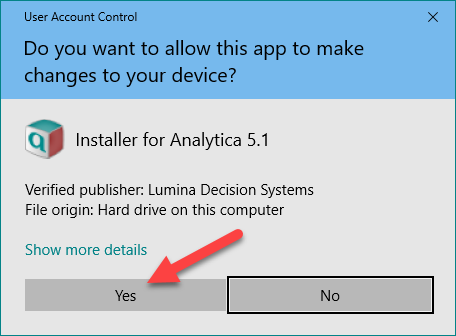
The Verified publisher is Lumina Decision Systems to indicate the installer is digitally signed as authentic. Click Yes.
The installation itself shouldn’t take longer than a minute. Follow the instructions in the installer.
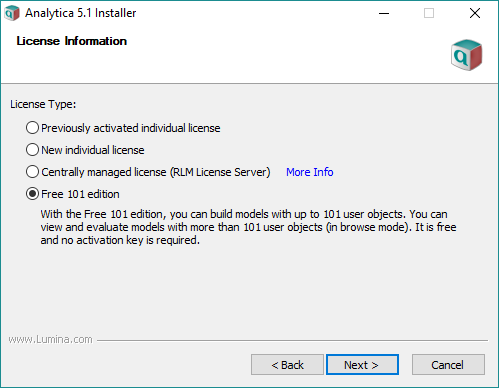
When you see this screen, select Free 101 edition as shown:
When you see this screen, select Free 101 edition as shown: